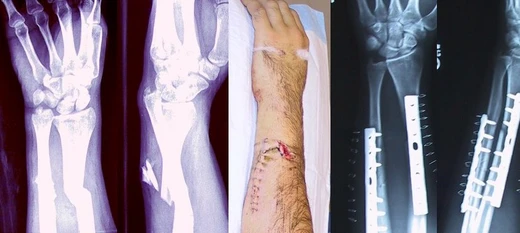
Chopart's fracture–dislocation
Dislocation of mid-tarsal foot joints with frequent fractures.

Chopart's fracture–dislocation is a dislocation of the mid-tarsal joints of the foot, specifically the talonavicular and calcaneocuboid joints. It is often accompanied by fractures of the calcaneus, cuboid, and navicular bones.
- field
- Orthopedic surgery, traumatology
- known_for
- Description of Chopart's fracture–dislocation
- associated_structures
- Talonavicular and calcaneocuboid joints
Lore & Background
Chopart's fracture–dislocation is usually caused by falls from height, traffic collisions, and twisting injuries to the foot, such as those seen in basketball players. The foot is most commonly dislocated medially (80%) and superiorly, occurring when the foot is plantar flexed and inverted. Lateral displacement occurs during eversion injuries. Associated fractures of the calcaneus, cuboid, and navicular are frequent, and open fractures occur in a small percentage of cases.
Reader's Guide
Diagnosis is made on plain radiograph of the foot, although the extent of injury is often underestimated. Treatment comprises early reduction of the dislocation, and frequently involves open reduction internal fixation to restore and stabilise the talonavicular joint. Open reduction and fusion of the calcaneocuboid joint is occasionally required. With prompt treatment, particularly open reduction, and early mobilisation the outcome is generally good. High energy injuries and associated fractures worsen the outcome.
Did You Know?
- The foot is usually dislocated medially (80%) and superiorly.
- Lateral displacement occurs during eversion injuries.
- Open fractures occur in a small percentage of cases.
- Diagnosis is made on plain radiograph, though the extent of injury is often underestimated.
More in Bone fractures 1-24
Spotted an error? Know more?
This is a living reference — every entry is fact-audited, and reader corrections feed straight into our audit queue. Suggest an edit · See this site's audit record