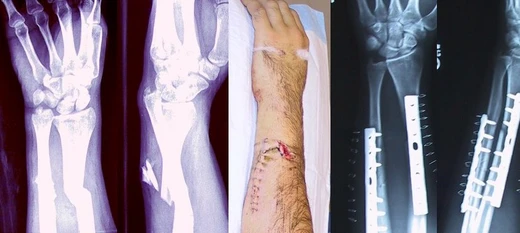
Bumper fracture
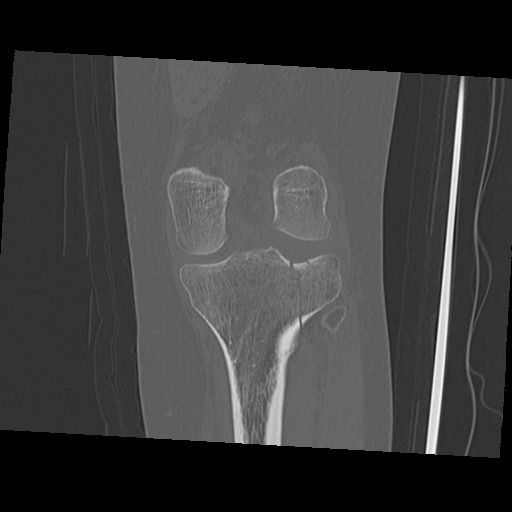
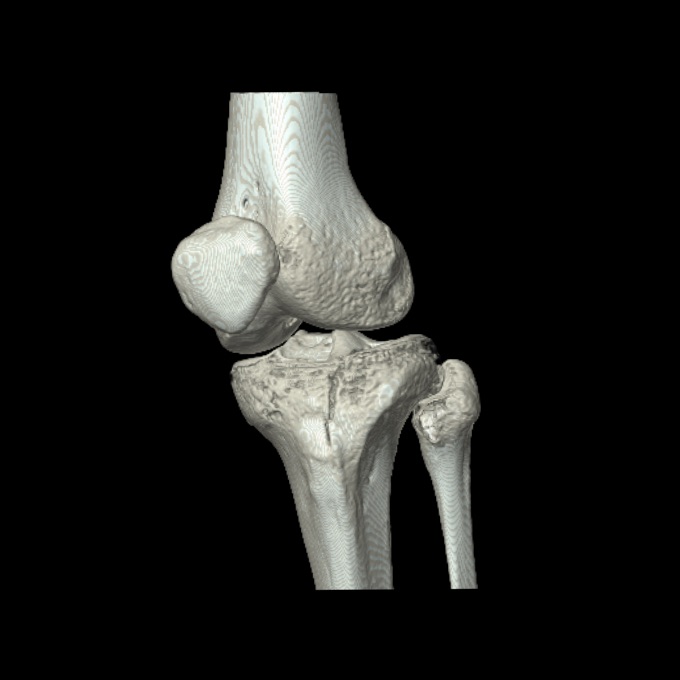
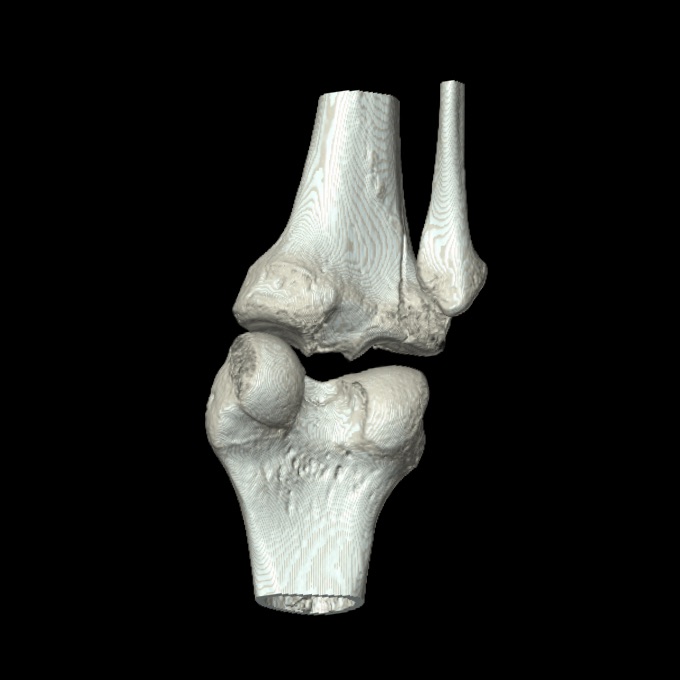
A historic term for a lateral tibial plateau fracture from car bumpers.

LottieLattes · CC BY-SA 4.0
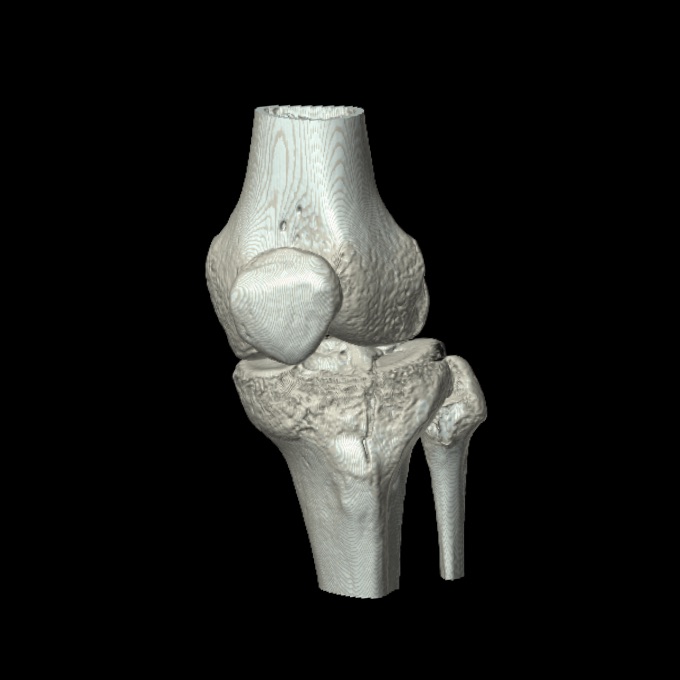
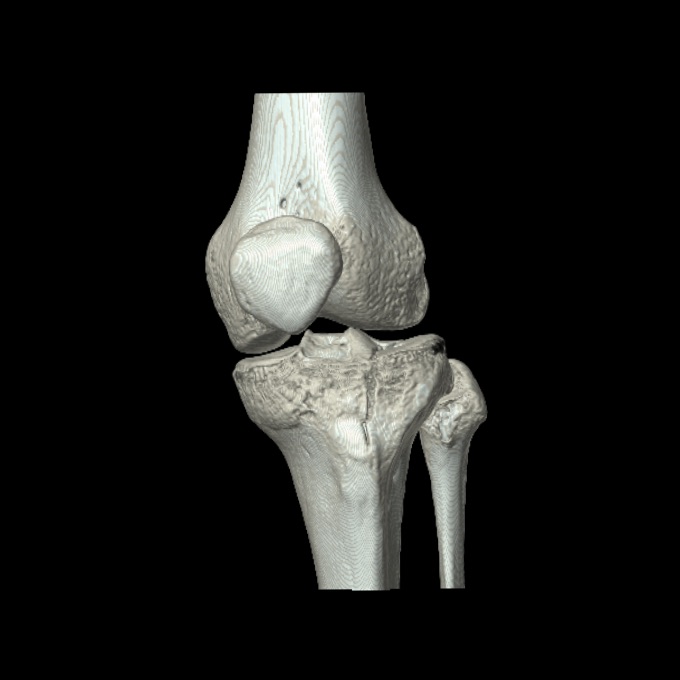
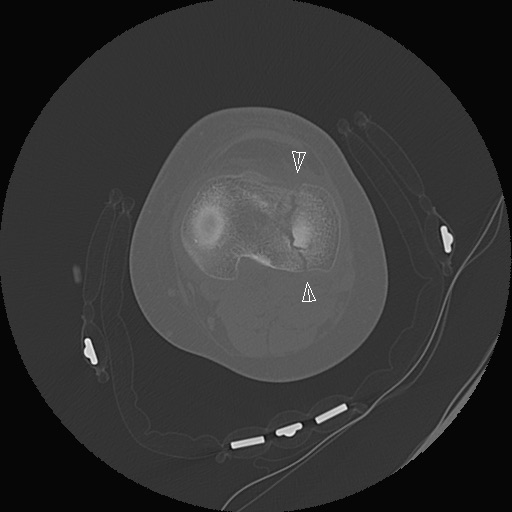
A bumper fracture is a historical term for a specific type of tibial plateau fracture, typically involving the lateral tibial plateau. The name originated from the injury's association with pedestrians being struck by the bumper of a motor vehicle while walking, a mechanism described in the 1920s.
- also_known_as
- Bumper fracture
- first_described
- 1929 by Cotton and Berg
- common_cause
- Car striking a pedestrian's fixed knee
- typical_fracture_type
- Lateral tibial plateau fracture
- frequency_among_tibial_plateau_fractures
- About 25%
- associated_risks
- Injury to medial collateral ligament or cruciate ligaments in about 10% of cases
Lore & Background
The term 'bumper fracture' was coined in 1929 by Cotton and Berg to describe a fracture of the lateral tibial plateau caused by a forced valgus movement. This occurs when a car bumper strikes the lateral side of a pedestrian's fixed knee while the foot is planted on the ground, compressing the lateral tibial plateau against the femoral condyle. However, this specific mechanism accounts for only about 25% of tibial plateau fractures; most such fractures result from motor vehicle accidents or falls.
Reader's Guide
The bumper fracture is significant as a classic example of how historical context shapes medical terminology. While the term persists in orthopedic literature, the injury mechanism it describes is now understood to be only one of many causes of tibial plateau fractures. The fracture typically involves the lateral plateau due to the natural valgus alignment of the limb and the relative weakness of the lateral tibial condyle compared to the medial. Understanding this injury helps illustrate the importance of mechanism in fracture classification and treatment planning, though modern management relies on imaging and classification systems like Schatzker rather than historical labels.
Did You Know?
- The term 'bumper fracture' was coined in 1929 by Cotton and Berg.
- The classic bumper fracture mechanism accounts for only about 25% of tibial plateau fractures.
- A bumper fracture is usually a fracture of the lateral tibial plateau caused by a forced valgus movement.
- Associated injury to the medial collateral ligament or cruciate ligaments occurs in about 10% of cases.
The Nature and Taxonomy of Bone Fractures
A bone fracture represents a partial or complete disruption in the structural continuity of any skeletal element. In its most severe presentation, the bone shatters into multiple fragments—a condition termed a comminuted fracture. When the broken segment pierces through the overlying skin, the injury is classified as an open or compound fracture, exposing internal structures to external contamination.
Fractures arise from two broad categories of cause. High-force impacts—falls, traffic collisions, physical altercations—produce traumatic fractures. Conversely, bones weakened by underlying conditions such as osteoporosis, osteopenia, bone cancer, or osteogenesis imperfecta can break under minimal stress; these are properly called pathologic fractures, with osteoporosis being the most frequent underlying cause. A third category, the periprosthetic fracture, occurs at the mechanical weak point adjacent to a surgical implant.
Clinicians further sort fractures by stability (whether fragments may shift), by soft-tissue involvement (closed versus open, clean versus contaminated), and by the pattern of displacement, which ranges from non-displaced to translated, angulated, rotated, or shortened. Most fractures demand urgent medical intervention to prevent secondary damage.
Pain, Complications, and the Threat of Secondary Injury
Although bone tissue itself lacks pain receptors, a fracture produces significant pain through several mechanisms. The periosteum and endosteum, both rich in nociceptors, are torn when the bone's continuity breaks. Ruptured bone marrow releases blood into surrounding soft tissues, creating edema and hematoma that generate pressure pain. Involuntary muscle spasms further compound discomfort as the body attempts to immobilize loose fragments. Damage to nearby nerves, blood vessels, or—critically—the spinal cord and cranial contents can produce additional specific symptoms.
Untreated or poorly managed fractures carry serious secondary risks. Compartment syndrome, if left unaddressed, can progress to the point where amputation of the affected limb becomes necessary. Non-union describes a bone that simply fails to heal, while malunion refers to healing in a deformed configuration; malrotation of the femur or tibia is a particularly common malunion pattern.
Complications are organized by timing: immediate (at the moment of injury), early (within the first few days), and late (months or years later). Open fractures dramatically elevate infection risk—roughly thirty percent after internal fixation, compared to one to two percent for closed fractures.
The Body's Remarkable Repair Sequence
The healing cascade begins the moment the fractured bone and surrounding tissues bleed, pooling into a fracture hematoma. This blood coagulates, forming a clot that bridges the gap between broken fragments. Over the following days, new blood vessels invade the jelly-like clot, delivering phagocytes that clear away non-viable debris. Fibroblasts within the vessel walls multiply and secrete collagen fibres, gradually replacing the clot with a rubbery collagen matrix that permits only minimal fragment movement unless subjected to severe or repeated force.
Next, select fibroblasts begin depositing bone matrix as collagen monomers, which spontaneously assemble into a structured framework. Calcium hydroxyapatite crystals are then deposited as insoluble mineral, stiffening the collagen into true bone. This initial "woven" bone lacks the mechanical strength of mature tissue and is progressively remodelled into dense "lamellar" bone.
In adults, the healing callus typically becomes visible on X-ray within six weeks, though children heal faster. Full remodelling can extend up to eighteen months, yet functional strength usually reaches roughly eighty percent of normal by the three-month mark. Adequate nutrition, particularly calcium intake, and appropriate weight-bearing stress support the process, while tobacco smoking actively hinders it.
Diagnosis, Risk Factors, and Classification Systems
Diagnosing a fracture typically begins with a thorough patient history and physical examination, followed by radiographic imaging to confirm the suspected break. When standard X-rays prove insufficient—particularly in complex anatomical regions—computed tomography or magnetic resonance imaging may be required. In certain cases, imaging of adjacent joints is indicated to rule out concurrent dislocations or fracture-dislocations.
The classification of fractures in orthopedic medicine draws on both historical and systematic approaches. Historically, many fracture types bear the names of the physicians who first described them. Modern taxonomy, however, organizes fractures along multiple axes: mechanism of injury (traumatic, pathologic, or periprosthetic), soft-tissue integrity (closed versus open, clean versus contaminated), and the degree and direction of displacement.
Risk factors significantly influence both the likelihood of fracture and the quality of recovery. Smokers tend to have lower bone density than non-smokers, placing them at substantially elevated fracture risk, and evidence indicates that smoking also delays the healing process. While theoretical concerns exist about non-steroidal anti-inflammatory drugs potentially slowing bone repair, current evidence does not support withholding these common analgesics in straightforward fracture cases.
Gallery
Frequently Asked Questions
What is Bumper fracture?
Bumper fracture is a historical clinical term for a lateral tibial plateau fracture, named after the specific mechanism in which a car's bumper strikes a pedestrian's planted knee. It represents roughly 25% of all tibial plateau fractures.
Who first described Bumper fracture?
The injury pattern was formally identified by Cotton and Berg in 1929, who outlined how a motor vehicle bumper hitting a fixed knee produces a characteristic lateral tibial plateau break. Their description gave the mechanism its enduring eponymous label.
What is the classic mechanism behind Bumper fracture?
A pedestrian with one knee locked on the ground is struck by the front bumper of a car, concentrating force directly into the lateral plateau of the tibia. This low-speed, axial-loading scenario was especially common in the decades before modern pedestrian-safety design.
What complications can Bumper fracture carry?
About 10% of cases involve additional soft-tissue damage, most often to the medial collateral ligament or one of the cruciate ligaments. When those ligaments are compromised, the fracture becomes a more complex, multi-structure injury to repair.
Why does Bumper fracture still matter in orthopedic history?
The term preserves a snapshot of early-20th-century traffic injuries and continues to serve as a quick clinical shorthand for the expected lateral plateau pattern and its associated ligament risks. It reminds modern practitioners that the mechanism of impact still guides diagnosis and surgical planning.
More in Bone fractures 1-24
Spotted an error? Know more?
This is a living reference — every entry is fact-audited, and reader corrections feed straight into our audit queue. Suggest an edit · See this site's audit record