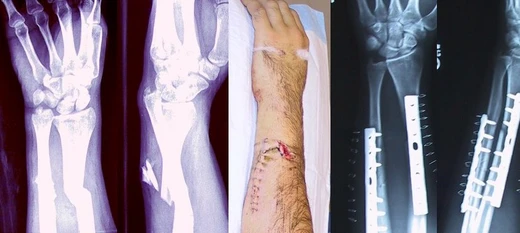
Boxer's fracture
A common hand fracture from punching hard objects.

Roberto J. Galindo · CC BY-SA 4.0
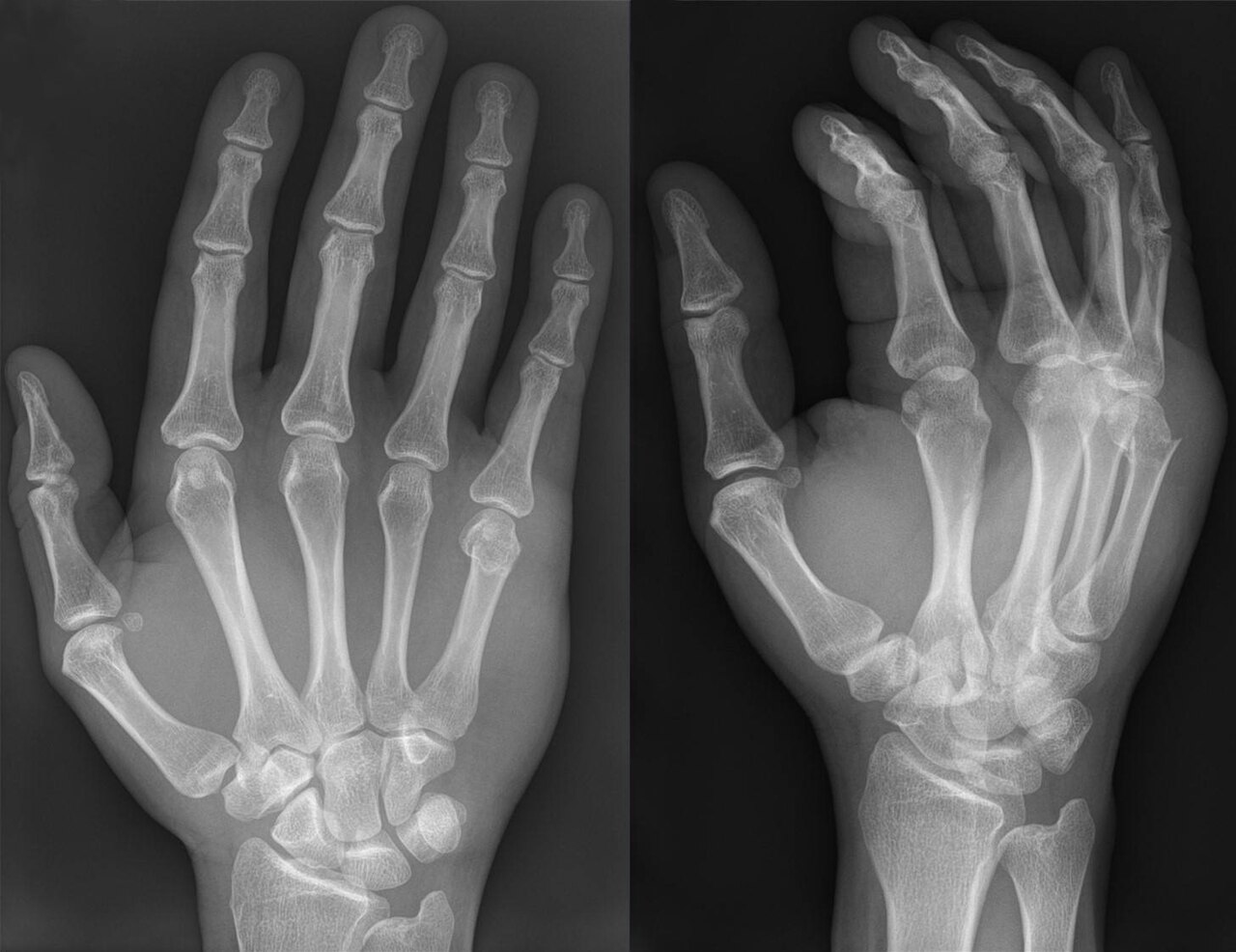
A boxer's fracture is a break of the fifth metacarpal bone of the hand near the knuckle, occasionally also referring to fractures of the fourth metacarpal. It is a common hand injury, representing about a fifth of hand fractures, and occurs more frequently in males than females. The condition is typically caused by impact from a clenched fist against a hard object, such as during a punch with improper form.
- field
- Orthopedics, Sports Medicine
- known_for
- Fracture of the fifth metacarpal bone near the knuckle, often from punching
- common_in
- Males aged 15–35
- prevalence
- About 20% of hand fractures
- healing_time
- Up to 12 weeks
Lore & Background
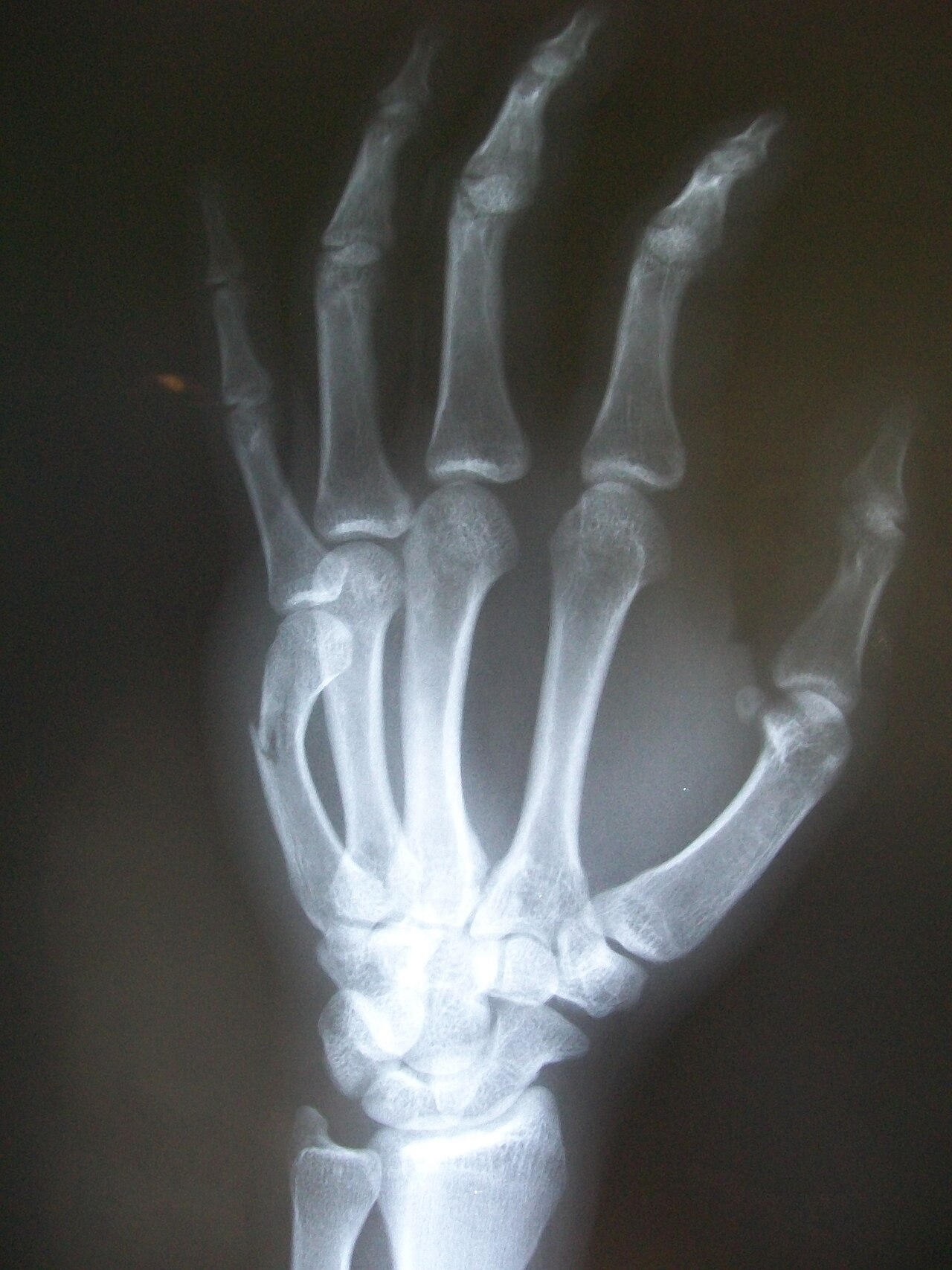
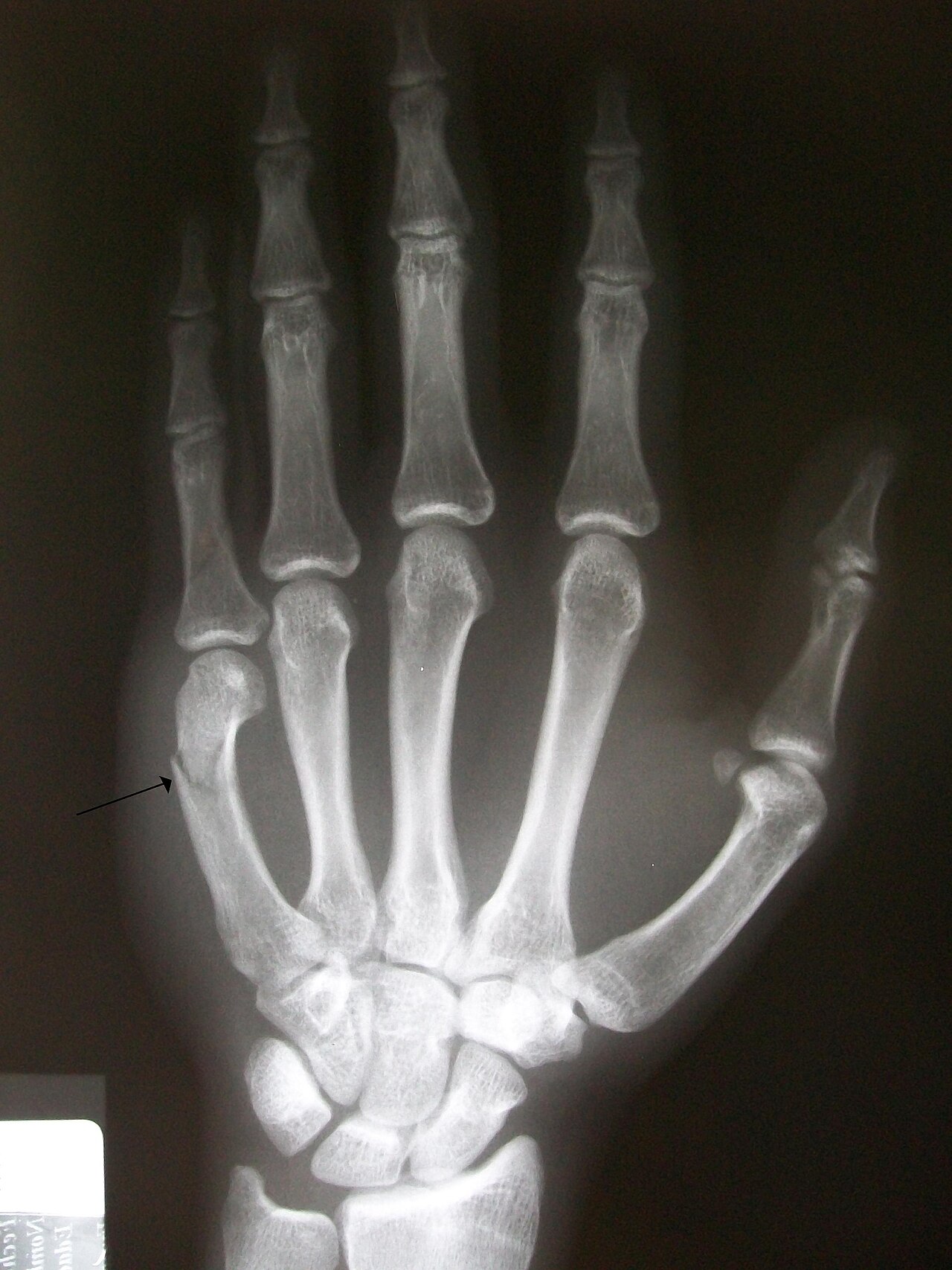
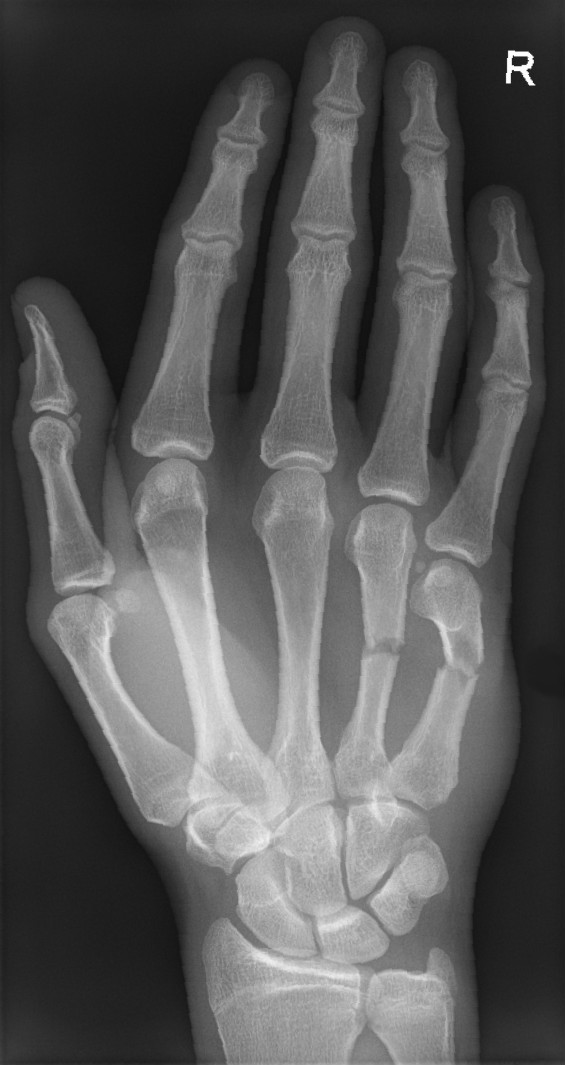
The fracture classically occurs when a person hits an object with a closed fist, causing the knuckle to bend toward the palm. Symptoms include pain, swelling, bruising, and a depressed knuckle. Diagnosis is generally suspected based on symptoms and confirmed with X-rays. In rare cases, a CT scan may provide a more detailed picture.
Treatment depends on the severity of angulation. For fractures with less than 30-40 degrees of angulation, buddy taping and a tensor bandage yield similar outcomes to reduction with splinting. For those with more than 30-40 degrees of angulation or rotational deformity, reduction and splinting or surgery may be recommended. Ice is applied to relieve pain and swelling, and open wounds are cleansed to avoid infection.
Prognosis is generally good, with total healing time not exceeding 12 weeks. The knuckle typically remains somewhat deformed. Muscle atrophy of 5 to 15 percent may be expected, with a rehabilitation period of approximately 4 months given adequate therapy. In mild cases, full rehabilitation can be achieved within 3 to 4 months.
Reader's Guide
Boxer's fracture is significant as one of the most common hand fractures, particularly among young males. The term itself reflects a history of confusion: some authorities reserve 'boxer's fracture' for breaks of the second or third metacarpal (from proper punching form) and use 'bar room fracture' for the fourth or fifth metacarpal (from improper punching). However, most medical professionals now describe any metacarpal fracture as a 'boxer's fracture.' The injury highlights the importance of proper punching form and hand protection in combat sports. Prevention includes hand wraps and boxing gloves, which stabilize the hand and reduce injury risk. The condition also illustrates socioeconomic and psychiatric correlations: male intentional punch injuries are linked with social deprivation, while female intentional punch injuries are more associated with psychiatric disorders. Treatment advances show that conservative management with early mobilization can be as effective as surgery for less severe fractures, reducing the need for invasive procedures.
Did You Know?
- Boxer's fracture represents about a fifth of all hand fractures.
- Males are nearly 50% more likely to sustain this fracture from a punch than females.
- The knuckle typically remains somewhat deformed even after healing.
- Some authorities distinguish 'boxer's fracture' (4th/5th metacarpal) from 'bar room fracture' (2nd/3rd metacarpal), but most medical professionals now use 'boxer's fracture' for any metacarpal fracture.
Anatomy & the Mechanics of Impact
The boxer's fracture involves a break in the fifth metacarpal bone near the knuckle, though the label is sometimes extended to cover the fourth metacarpal as well. The classic mechanism is striking a hard, immovable object with a closed fist. When a punch lands with poor form, the force drives the knuckle toward the palm, creating a dorsal bend in the bone until it finally snaps. This explains why the fourth and fifth metacarpals bear the brunt of these injuries. In contrast, a properly executed punch aligns the second and third metacarpals in a straight line with the radius and humerus, allowing force to travel through the skeletal chain and dissipate harmlessly. Fractures of the second or third metacarpals are therefore rare. The impact typically produces a snapping or popping sensation, followed by swelling, bruising, and a visibly depressed knuckle. Abrasions or lacerations on the hand are common companions to the fracture itself.
Diagnosis & the Treatment Threshold
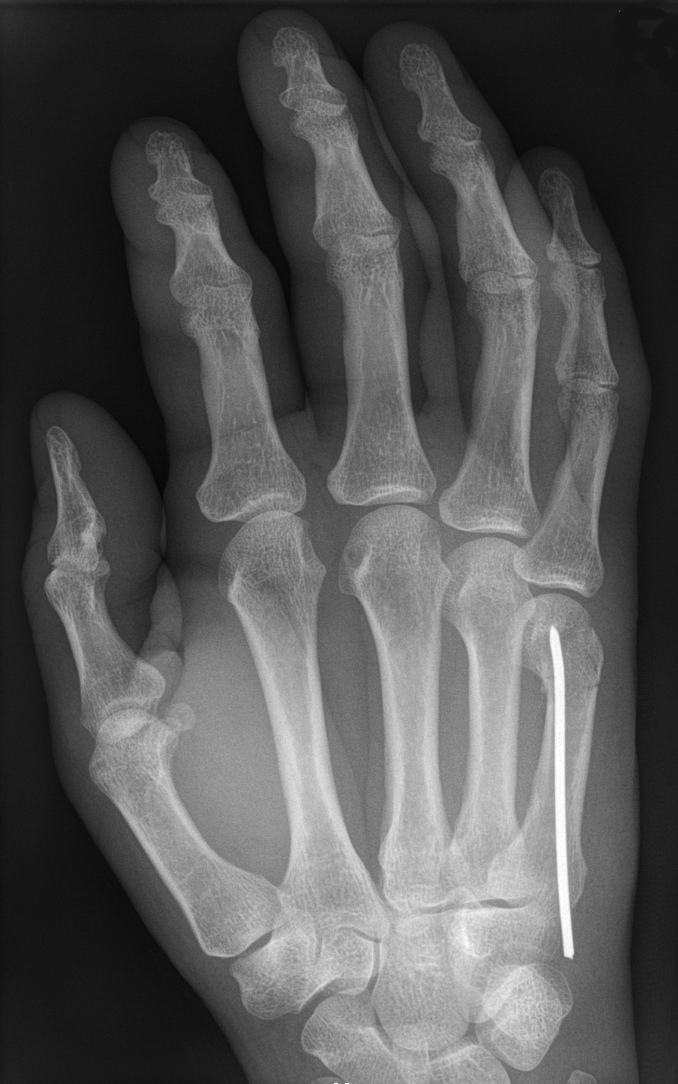
A physician's physical examination is the primary diagnostic tool, with X-rays confirming the fracture and measuring its angulation. In exceedingly rare cases, a CT scan provides additional structural detail. Treatment hinges largely on the degree of angulation. For fractures angulated less than 70 degrees, simple buddy taping combined with a tensor bandage has been shown to produce outcomes comparable to formal reduction and splinting. Even more conservative approaches, such as early mobilization, have proven non-inferior to surgical pinning when palmar angulation stays below 45 degrees. When angulation exceeds 70 degrees or the fractured finger has rotated out of alignment, reduction and splinting become the standard recommendation. In the most severe presentations involving rotational deformity or extreme angulation, surgery with pins or plates may be necessary to hold bone fragments in place. Initial care always includes ice for pain and swelling, plus cleansing of any open wounds to prevent infection.
Who Gets Hurt: Epidemiology & Social Patterns
Metacarpal fractures account for roughly one-fifth of all hand fractures, with the fifth metacarpal being the most frequently affected bone. These injuries cluster among males aged fifteen to thirty-five. Men are nearly fifty percent more likely than women to sustain a punch-related fracture, with reported rates of about 3.7 injuries per 1,000 males annually versus 1.3 per 1,000 females. Interestingly, the social correlates differ by sex: male intentional punch injuries correlate predominantly with social deprivation, while female punch injuries show a stronger association with psychiatric disorders. Hand and wrist injuries overall represent fifteen to twenty percent of all emergency room visits. The financial burden, while not precisely quantified, is considerable when factoring in emergency care, immobilization, potential surgery, follow-up appointments, and lost or limited work capacity. Boxers and combat athletes mitigate their risk through hand wraps and gloves, which stabilize the hand during impact.
Healing, Recovery & the Lasting Knuckle
The overall outlook for a boxer's fracture is reassuring. Total healing time rarely exceeds twelve weeks, with the first two weeks bringing a marked reduction in swelling and the earliest improvement in the ability to clench the fist. Finger extension in all directions tends to recover more slowly. Hard casts are seldom needed; soft splints can be briefly removed for skin cleaning and drying. Pain management is individualized, ranging from over-the-counter analgesics to narcotic medication. A muscle atrophy of five to fifteen percent is a realistic expectation, and a full rehabilitation period of approximately four months is typical with adequate therapy. In the mildest cases, patients can reach full functional recovery within three to four months. One persistent caveat remains: the knuckle typically retains some degree of deformity even after complete healing, a cosmetic reminder of the impact that caused the break.
Gallery
Frequently Asked Questions
Who is Boxer's fracture?
Boxer's fracture is a break of the fifth metacarpal bone—the one running down to your pinky knuckle—just above the joint. In some references it also covers a break of the fourth metacarpal, but the classic definition centers on that fifth bone.
What are Boxer's fracture's powers/role?
Its signature 'move' is a sudden, painful snap in the knuckle area, usually triggered when a clenched fist slams into a hard surface. The most common trigger is a poorly formed punch, where force concentrates on the pinky-side knuckle instead of spreading across the whole hand.
How does Boxer's fracture's story end?
The typical 'arc' runs up to twelve weeks of immobilization and follow-up care before the bone fully remodels. Most patients regain normal grip strength by the end of that window, though returning to heavy punching may take a little longer to feel safe.
Why is Boxer's fracture important?
It accounts for roughly one-fifth of all hand fractures, making it one of the most frequently seen injuries in orthopedic and sports-medicine clinics. Its high prevalence keeps it a staple topic in hand-surgery training and a go-to example for teaching metacarpal anatomy.
Who is most likely to encounter Boxer's fracture?
Males between the ages of 15 and 35 are the demographic most often seen with this injury, likely due to higher rates of contact sports, manual labor, and altercations. Females can certainly sustain one, but the statistics skew heavily toward young and middle-aged men.
More in Bone fractures 1-24
Spotted an error? Know more?
This is a living reference — every entry is fact-audited, and reader corrections feed straight into our audit queue. Suggest an edit · See this site's audit record