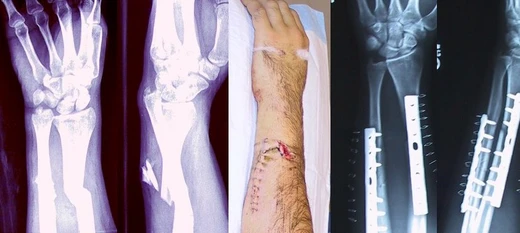
Basilar skull fracture
A skull base fracture from severe trauma, often causing CSF leaks.

Robert Pleskot, MD · CC BY-SA 4.0
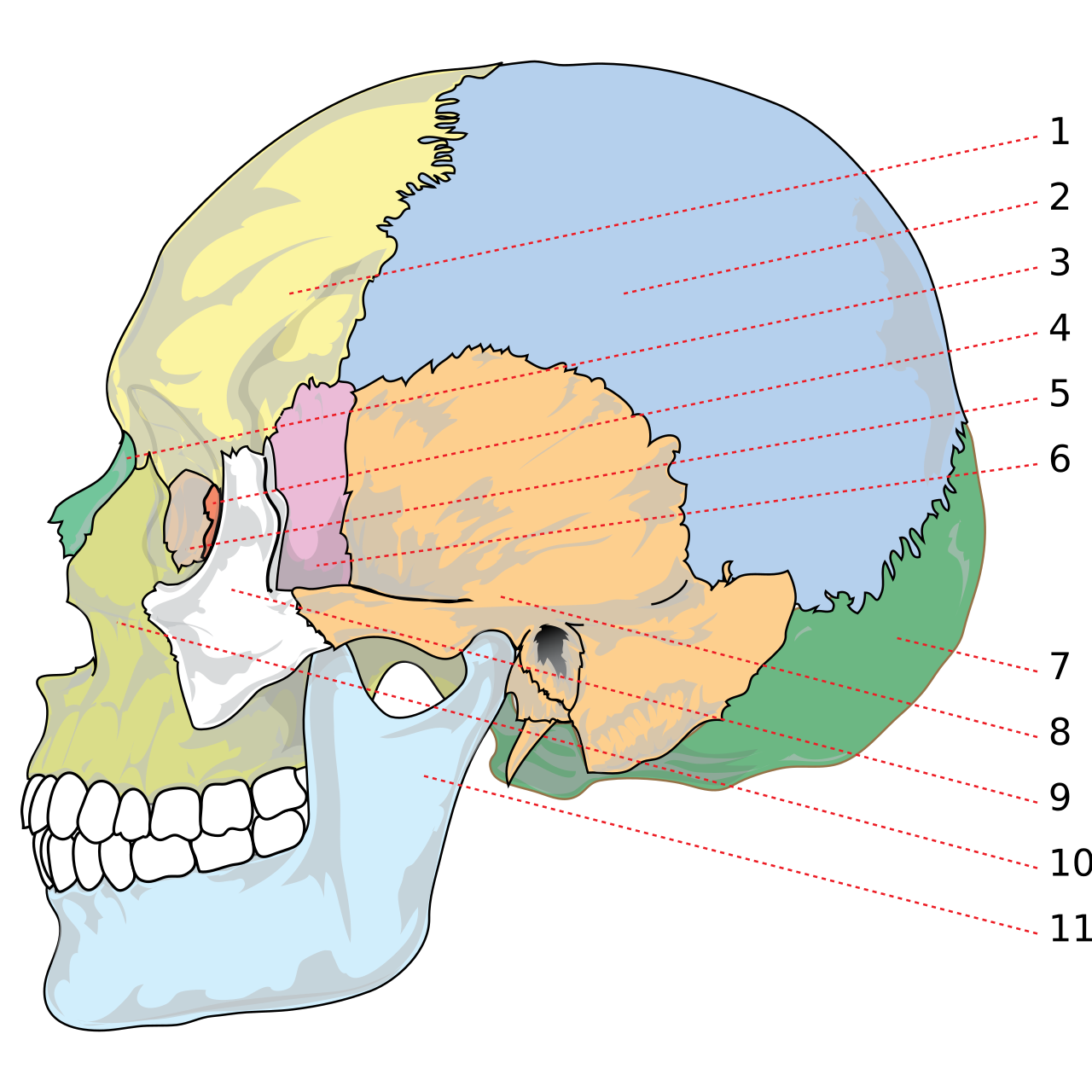
A basilar skull fracture is a break of one or more bones in the base of the skull, typically resulting from significant trauma. It is a serious injury often associated with severe head trauma, occurring in about 12% of people with a severe head injury, and can lead to complications such as cerebrospinal fluid leaks, meningitis, cranial nerve injuries, or vascular damage.
- type
- Medical condition
- affected_bones
- Temporal, occipital, sphenoid, frontal, ethmoid
- occurrence_in_severe_head_injury
- 12%
- CSF_leak_rate
- 20%
- meningitis_rate
- 14%
- common_signs
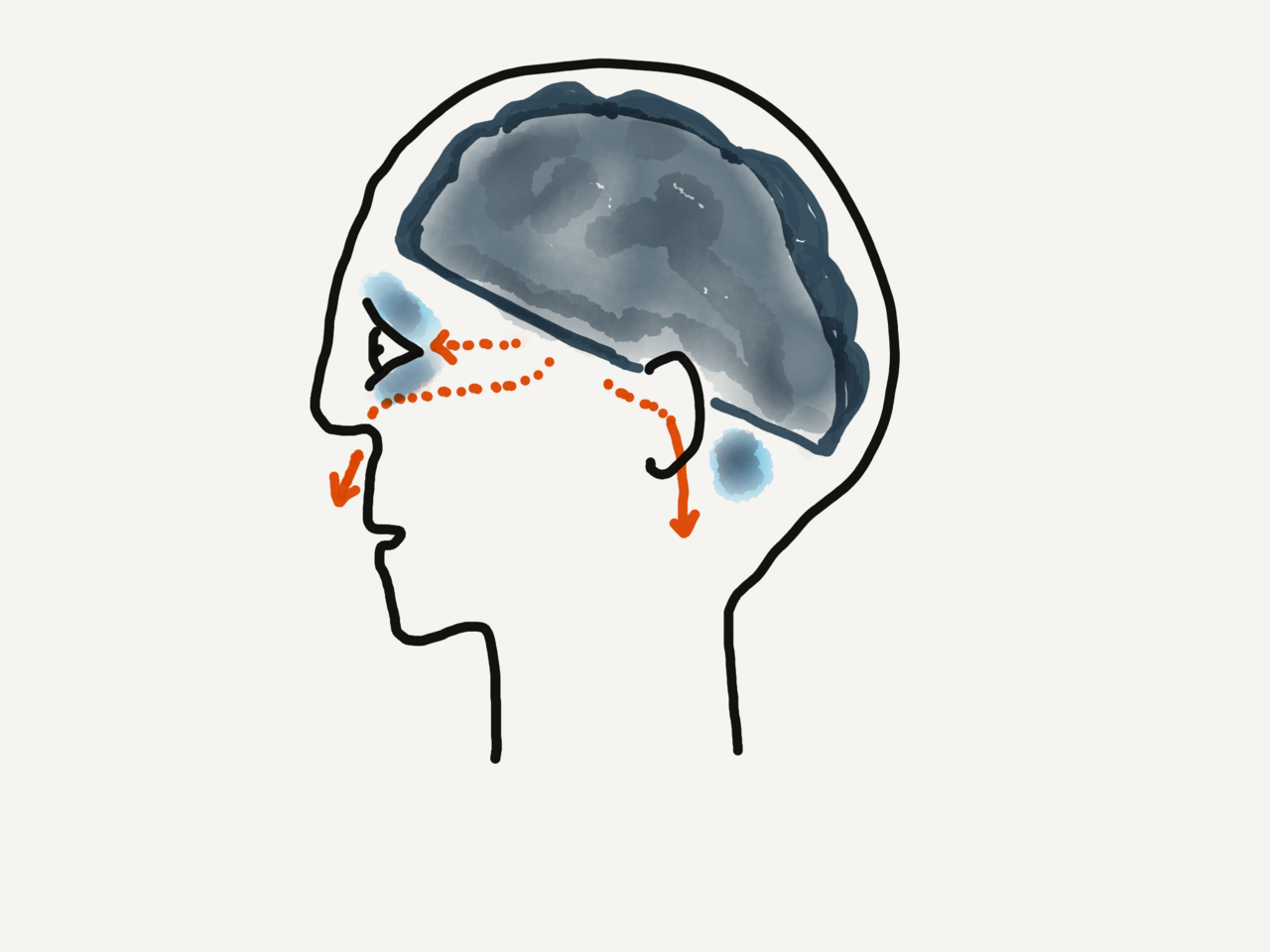
- Battle's sign, raccoon eyes, hemotympanum
Lore & Background
Basilar skull fractures are classified by location into anterior, middle, and posterior fossa fractures, and by fracture line direction into longitudinal, transverse, and ring types. In temporal bone fractures, longitudinal fractures run parallel to the long axis of the petrous bone and are the most common type, often resulting from blunt impact to the side of the head. Transverse fractures run perpendicular to the petrous ridge, typically from frontal or occipital impacts, and are less common. Ring fractures separate the foramen magnum from the rest of the skull base, typically from falls onto the feet or buttocks.
Reader's Guide
Basilar skull fractures are significant due to their potential for life-threatening complications, including meningitis (14% of cases), cerebrospinal fluid leaks (20%), and injuries to cranial nerves or blood vessels. Diagnosis is typically by CT scan. Treatment depends on the extent and location of internal injuries; surgery may be needed to seal persistent CSF leaks, relieve nerve pressure, or repair vascular damage. Prophylactic antibiotics do not provide clinical benefit in preventing meningitis. Non-displaced fractures often heal without intervention. In motor racing, basilar skull fractures have been a common cause of death, leading to mandates for head and neck restraints like the HANS device, which has demonstrated life-saving abilities.
Did You Know?
- Battle's sign is bruising of the mastoid process of the temporal bone.
- Raccoon eyes refers to bruising around the eyes.
- A cerebrospinal fluid leak occurs in about 20% of basilar skull fracture cases.
- Longitudinal fractures are the most common type of temporal bone fracture, a subset of basilar skull fractures.
Clinical Presentation & Diagnosis
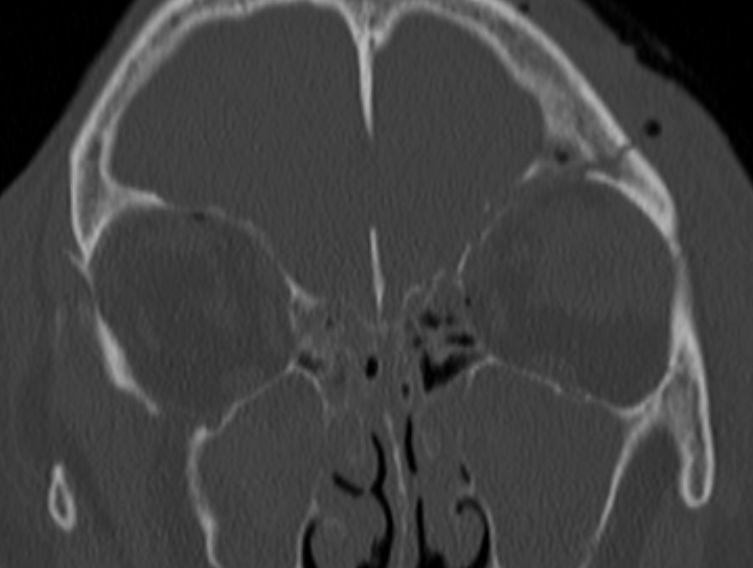
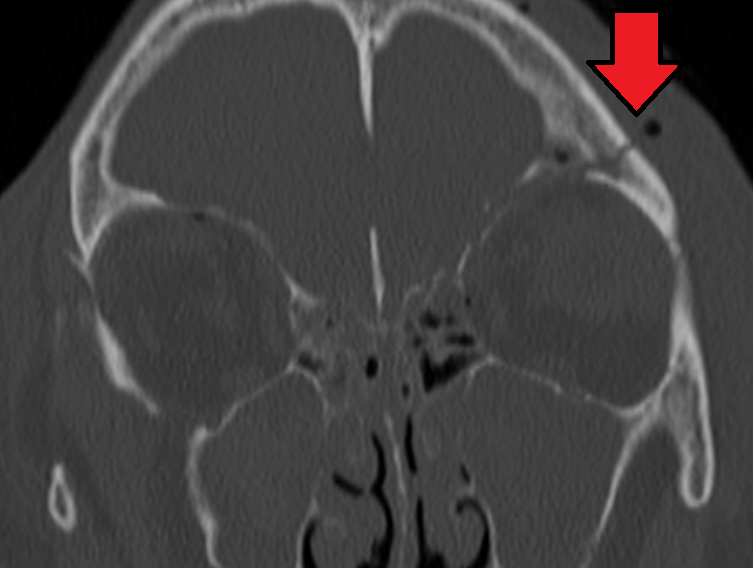
A basilar skull fracture represents a break in one or more of the temporal, occipital, sphenoid, frontal, or ethmoid bones at the base of the skull, and it typically demands a substantial amount of traumatic force to produce. The condition accounts for roughly twelve percent of all severe head injuries. Clinically, the most recognizable hallmarks include Battle's sign—a bruise over the mastoid process behind the ear—along with the so-called "raccoon eyes," a periorbital discoloration that gives the face a masked appearance. Blood pooling behind the eardrum (hemotympanum) and profuse bleeding from the nose or ears are additional red flags. Cerebrospinal fluid may escape through the nostrils or ear canal in approximately one in five patients. Cranial nerve palsy, conductive or sensorineural hearing loss, nystagmus, and vomiting round out the symptom picture, while optic nerve entrapment, caused by compressed bone fragments, affects one to ten percent of cases. Facial fractures frequently accompany the injury. Because the fracture lines can be subtle on plain radiographs, diagnosis relies primarily on computed tomography, which reveals the exact trajectory and extent of the break.
Fracture Classification & Mechanisms
Based on the direction of the impacting force, three principal patterns are recognized. A longitudinal fracture splits the skull base into right and left halves, typically from a blunt blow to the face, forehead, or back of the head, or from front-to-back crushing. A transverse fracture, the most common variant, divides the base into anterior and posterior segments and usually courses through the petrous temporal bones and the sella turcica, potentially threatening the pituitary gland. Bleeding from both ears is a classic sign. The mechanism often involves a sharp blow to the chin—such as falling onto a hard surface—where energy transmits through the mandibular rami and temporomandibular joints; the chin wound may be merely a small abrasion. A ring fracture separates the rim of the foramen magnum from the rest of the skull base, usually after a fall from height where the victim lands on the feet or buttocks, driving the skull down onto the vertebral column. This pattern risks damage to vessels and nerves exiting the foramen magnum, producing facial or oculomotor nerve loss or hearing impairment. The temporal bone is involved in roughly seventy-five percent of all basilar skull fractures, and in children, greater bone flexibility and suture separation may prevent a true fracture from forming.
Complications & Treatment
The management of a basilar skull fracture is guided by the extent and location of damage to intracranial structures. Non-displaced fractures often heal on their own without any intervention. However, when a cerebrospinal fluid leak persists, surgeons may operate to seal the dural defect. Similarly, operative repair is indicated to relieve compression on a cranial nerve or to address a lacerated blood vessel. A particularly dangerous complication involves the internal carotid artery: when the carotid canal is fractured, dissection, occlusion, or pseudoaneurysm formation can occur, and while many such injuries remain asymptomatic, they may also produce life-threatening hemorrhage. Involvement of the petrous segment of the carotid canal carries a relatively high risk of vascular damage. Meningitis develops in roughly fourteen percent of patients, yet current evidence does not support the use of prophylactic antibiotics—even in the presence of a CSF leak—as a means of preventing this infection. Cranial nerve injuries, including facial and oculomotor nerve dysfunction and hearing loss, add further complexity. In the most severe presentations, the injury is fatal.
Motor Racing Tragedies & Safety
No arena has illustrated the lethal potential of a basilar skull fracture more starkly than motor racing. The injury has claimed the lives of drivers across multiple disciplines: Formula One's Roland Ratzenberger; IndyCar's Bill Vukovich Sr., Tony Bettenhausen Sr., Floyd Roberts, Scott Brayton, Jovy Marcelo, Greg Moore, and Gonzalo Rodriguez; NASCAR's Dale Earnhardt Sr., Adam Petty, Tony Roper, Kenny Irwin Jr., Neil Bonnett, John Nemechek, J.D. McDuffie, Richie Evans, and Tim Williamson; and ARCA's Blaise Alexander and Slick Johnson. A small number of drivers, including Ernie Irvan at the 1994 Michigan International Speedway, Stanley Smith, and Rick Carelli, have survived the injury. In response, many sanctioning bodies now mandate head-and-neck restraint systems, most notably the HANS device. That device has demonstrated its life-saving value repeatedly: it protected Jeff Gordon at the 2006 Pocono 500 and the 2008 UAW-Dodge 400, Michael McDowell during qualifying for the 2008 Samsung 500, Robert Kubica at the 2007 Canadian Grand Prix, and Elliott Sadler at both the 2003 EA Sports 500 and the 2010 Sunoco Red Cross Pennsylvania 500.
Gallery
Frequently Asked Questions
Who is Basilar skull fracture?
It is a break in one or more bones at the skull's base—temporal, occipital, sphenoid, frontal, or ethmoid—produced by significant head trauma. Roughly 12% of patients with a severe head injury end up with this particular fracture.
What are Basilar skull fracture's powers/role?
Its main effects involve tearing the meninges and producing cerebrospinal fluid leaks in about 20% of cases, as well as injuring nearby cranial nerves or blood vessels. It can also create a route for infection, with meningitis developing in roughly 14% of affected patients.
How does Basilar skull fracture's story end?
With timely medical care most patients survive the acute phase, though the CSF leak and meningitis risk demand prolonged monitoring. Without intervention, complications such as cranial nerve damage, vascular injury, or infection can make the outcome far more severe.
Why is Basilar skull fracture important?
It matters because the skull base sits at the intersection of the brain's protective membranes, cranial nerves, and major vessels, so even a small break can compromise multiple critical systems. Early recognition is essential because its warning signs can be subtle and easy to miss initially.
What are Basilar skull fracture's signature moves?
Its classic tells include Battle's sign (bruising behind the ear), raccoon eyes (periorbital ecchymosis), and hemotympanum (blood pooling behind the eardrum). These visible markers help clinicians identify the fracture even before imaging confirms it.
More in Bone fractures 1-24
Spotted an error? Know more?
This is a living reference — every entry is fact-audited, and reader corrections feed straight into our audit queue. Suggest an edit · See this site's audit record